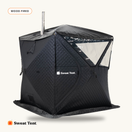

Sweat Tent Large — Owner's Guide
Large
Wood-Fired Outdoor Sauna
Fire & heat safety
- Surfaces get hot. The stove, chimney, rocks, and poles can burn on contact. Use the included glove; never let children touch the unit.
- Outdoor use only. Never use indoors or in any enclosed, unventilated space. Keep the bottom intake vent open at all times.
- Keep 3 ft of clearance from any structure, object, or combustible material. Clear the area of brush and debris; don't set up under low branches.
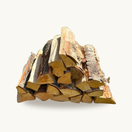
- Burn hardwood only — preferably white birch. Any other fuel is unsafe and voids the warranty.
- Never leave the sauna unattended while it's lit, and never sleep inside while the stove is running.
- Don't use under the influence of alcohol, drugs, or other intoxicants. Remove all jewelry before use.
Watch the setup
New to the Sweat Tent? Watch the full setup before your first burn.
How to set up your Sweat Tent SaunaWatch on YouTube ↗What's in the box
Lay everything out and confirm all 14 items before you start. Missing or damaged parts? Email contact@sweattent.com.
Initial burn (season the stove)
Your stove ships fresh off the line. Before its first use inside the tent, run an initial burn outside: light two logs and let them burn completely until they burn out. This completes the initial burn and cures the paint to the steel. The stove will pop, crackle, and change color — that's normal.
- Empty the stove and set it on a non-combustible surface outdoors, legs out.
- Assemble & attach the chimney — interlock the pieces until they lock, then press onto the stove.
- Open the control vent fully. Add two logs (hardwood, preferably white birch) and a fire starter if desired, then light.
- Let the two logs burn completely until they burn out — this completes the initial burn. Let the stove cool fully before handling.
Set up your tent
- Find a flat, clear 8 ft × 8 ft spot on concrete, tile, dirt, grass, turf, ice (1 ft+ thick), or unvarnished wood — at least 3 ft from anything.
- Pop up the walls by pulling each of the 4 wall endpoints out until they lock, then push up the roof endpoint from inside.
- Anchor it down — weight the skirt (rocks, blocks, sandbags) and secure with the stakes and ropes. Fit the metal-ring chimney collar into the roof opening.
- Install the roof cover and clip the corners to the side loops with the included carabiners and straps.
- Lay the fire mat down first, then place the seasoned, fully-cooled stove on it — directly under the ceiling opening, door facing the tent door. Guide the chimney up through the roof collar.
- Assemble the rock basket and load the rocks on top of the stove. Bring in wood seating only (no metal).
Fire it up & sweat
- Open the vents. Keep the rectangular floor intake open at all times; slide the stove's control vent fully open.
- Light the fire with 2–3 split hardwood logs — preferably white birch — and a fire starter if desired. Keep the stove door closed except when adding wood.
- Reach temperature. Reaches 176–200°F in 20–30 minutes, and maintains 180°F+ even at outside temps as low as 10°F. Add a log or two to climb; more airflow burns hotter.
- Sweat it out. Pour water slowly over the rocks for steam, and stay in as long as you're comfortable — step out to cool down whenever you need to. Always use the glove on the stove door.
- Let the fire burn out naturally. Never move the stove until it's fully cooled. Dispose of ashes in a metal container with a lid.
A stove or chimney that glows red isn't dangerous, but it means you're over-firing. Restrict airflow and use no more than 4 split logs at a time to protect the steel.
Care & storage
After use
Let everything cool fully. Clean the stove and remove ashes periodically into a lidded metal container. Wipe down condensation and let the tent dry before packing.
Regularly
Brush creosote from the chimney to prevent chimney fires. Remove surface rust from the stove with a mildly abrasive sponge and white vinegar or rust remover.
Storage & weather
The tent can stay set up outdoors with the roof cover on through normal conditions — but it's still a tent. During high winds, heavy snow, severe storms, or other extreme weather, take it down to prevent damage. It's built to stay up for extended periods, but it isn't meant to withstand extreme weather indefinitely.
Troubleshooting
| Issue | Likely cause | Fix |
|---|---|---|
| Fire won't stay lit | Wet/green wood or too little air | Use dry hardwood (white birch burns cleanest); open the control vent and pull the ashtray out an inch; add a starter |
| Not getting hot enough | Too few logs / restricted airflow / cold day | Add 1–2 split logs, open both vents, keep the door closed |
| Smoke coming into the tent | Chimney not seated, cap obstructed, or wind downdraft | Confirm chimney sections are locked and the cap is clear; keep the floor intake open |
| Creosote smell / buildup | Burning softwood or a low smoldering fire | Burn dry hardwood hotter; brush the chimney regularly |
| Water pooling / condensation | Normal — steam meets cold exterior | Ventilate, wipe down, dry fully before storage |
| Zipper sticking | Grit in the track | Clean the track; never force it (replacement zipper kits available) |
FAQ
How long does it take to heat up?
Reaches 176–200°F in 20–30 minutes, and maintains 180°F+ at outside temps as low as 10°F. Wood type and outside temperature affect the time; 3–4 pieces of split hardwood — preferably white birch — is usually enough.
What flooring can I use inside?
Concrete, tile, dirt, grass, turf, unvarnished wood, or ice at least 1 ft thick. Always place the included fire mat under the stove. Tip: interlocking wood tile flooring from a hardware store works great inside the tent.
What wood should I burn?
Use hardwood — preferably white birch — for the cleanest burn. Avoid softwoods and synthetic/processed logs, which create more creosote and can void the warranty.
How do I keep it from blowing over?
The tent has a built-in skirt — weigh it down with cinder blocks, bricks, or sandbags, and use the included stakes and ropes. In high winds or storms, take the tent down.
Is it okay for the stove to glow red?
It's not dangerous, but it signals over-firing. Reduce airflow and use no more than 4 split logs at a time to avoid damaging the stove over time.
Can I leave it set up permanently?
It can stay up for extended periods with the roof cover on during normal conditions, but it's still a tent — take it down during high winds, heavy snow, or severe storms. It isn't meant to withstand extreme weather indefinitely.
Specifications
- Operating temperature
- 176–200°F (80–93°C)
- Time to temperature
- 20–30 min
- Setup time
- ~15 min
- Capacity
- Up to 6
- Dimensions
- 6 × 6 × 7 ft (+2 ft chimney)
- Tent / stove weight
- ~30 lb / ~65 lb
- Recommended fuel
- White birch hardwood
- Clearance required
- 3 ft
Before you sweat
This information is for general wellness only and is not medical advice. The Sweat Tent is not an FDA medical device and is not intended to diagnose, treat, cure, or prevent any disease. Always consult a licensed healthcare professional before sauna use.
Sauna therapy can be dangerous for some people. Do not use if you are pregnant, under 18, or under the influence of alcohol or drugs, or if you have cardiovascular problems, an impaired ability to sweat, heat insensitivity, or other conditions affected by heat. Listen to your body, hydrate, and step out to cool down whenever you need to. Stop immediately and seek care if you feel faint, dizzy, or unwell.